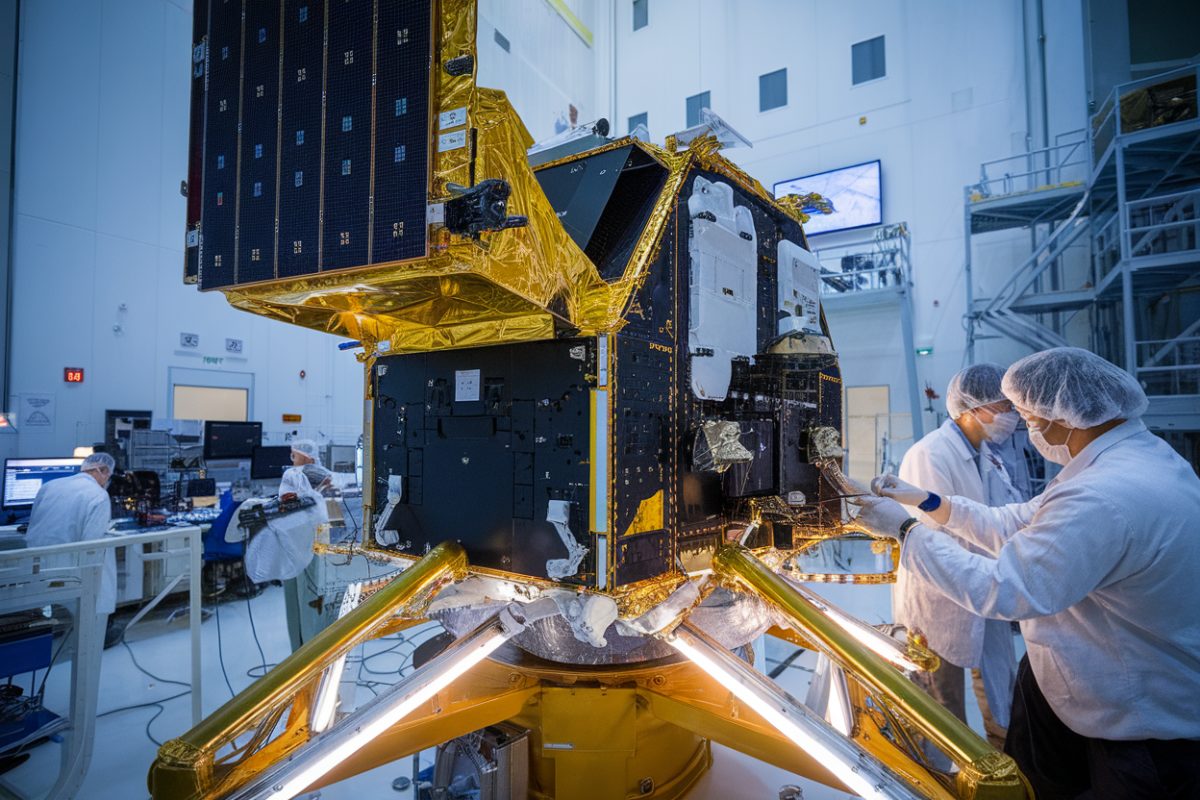
Starlink is betting its next-generation satellites can do what cell towers can’t: beam “5G-like” mobile data straight to ordinary phones—no special hardware—while dramatically boosting capacity in the places carriers still struggle to reach.
The company says its upcoming V2 satellites are designed to deliver up to 100 times the data density of its current generation, a leap that could make satellite-to-phone service feel less like an emergency backup and more like a real alternative. Early testing is expected to begin in 2027.
A bigger, bolder promise: 100x more capacity
Starlink’s pitch is simple and aggressive: faster speeds, more simultaneous users, and coverage that doesn’t end when the highway does. The V2 satellites, the company says, are built to support high-bandwidth basics—streaming, web browsing, app use, and voice calls—over a direct-to-cell connection.
If Starlink can pull it off at scale, it could reshape how people think about mobile coverage in rural America, on tribal lands, in mountain towns, and across long stretches of the West where dead zones are still a fact of life.
Starlink has suggested the technology could potentially reach as many as 1.7 billion people worldwide—an eye-popping figure that underscores the ambition, even if real-world performance will depend on spectrum access, partnerships, and how many satellites are actually in orbit.
The tech hurdle: making space behave like a cell network
Delivering 5G-style performance from orbit isn’t just a software update—it’s a physics and engineering grind. Starlink is leaning on advanced phased-array antennas and optimized network protocols to squeeze more capacity and throughput out of each satellite.
The company is also pointing to custom silicon—purpose-built chips intended to handle far more simultaneous connections. That matters because the satellite-to-phone model only works if the network can support lots of users at once without collapsing into slowdowns.
Another make-or-break piece is coordination with mobile carriers. Direct-to-cell service requires tight integration with existing networks and careful spectrum management. Starlink has already signaled it’s working with telecom partners in Europe and the U.K., a sign the industry is preparing for satellite connectivity to become part of everyday mobile service.
The hardest part may be consistency. Consumers won’t tolerate a connection that works great one minute and drops the next, especially if Starlink wants this to feel like mainstream coverage rather than a last-resort lifeline.
Why rural America could be the first big win
The most immediate impact could land in places where building and maintaining towers is expensive and slow. Satellite coverage doesn’t care whether you’re 5 miles or 50 miles from the nearest city—about 8 to 80 kilometers—because the infrastructure is overhead.
That could be a game-changer for remote communities that still struggle with reliable connectivity for telehealth visits, online classes, and basic access to services that many Americans take for granted.
But the big unanswered question is cost. Starlink’s technology can be transformative only if pricing—both for carriers and end users—doesn’t put it out of reach for the very communities it’s supposed to help.
The competition is real: Amazon and OneWeb want in
Starlink isn’t alone in the race to blanket the planet with connectivity from orbit. OneWeb has been building its own satellite network, largely focused on enterprise and government customers rather than individual consumers.
Amazon’s Project Kuiper is the other heavyweight. Amazon has deep pockets and world-class logistics, but Starlink has a major head start in launches, operational experience, and public visibility.
The stakes are enormous: whoever cracks reliable, high-capacity satellite connectivity could influence everything from consumer mobile service to disaster response to how the next billion users get online.
What it could mean for the future of wireless
If Starlink’s V2 plan works, it could reduce the telecom industry’s dependence on expensive ground infrastructure—especially in hard-to-serve regions—while giving carriers another way to extend coverage without waiting years for permits, construction, and backhaul.
It would also force regulators to grapple with spectrum policy and oversight for space-based networks that don’t respect borders the way terrestrial networks do. The next era of wireless may be decided as much by policy and partnerships as by rockets and antennas.
For consumers, the promise is straightforward: fewer dead zones, more competition, and a world where “no service” becomes a rarer phrase—whether you’re driving across the desert or living miles from the nearest tower.
Key Takeaways
- Starlink V2 satellites promise 5G-like speeds and 100x higher data capacity.
- Technological advances include phased-array antennas and custom silicon chips.
- The potential impact is huge for remote areas, with improved and affordable connectivity.
Frequently Asked Questions
What are the benefits of Starlink V2 satellites?
V2 satellites promise 5G-like speeds and 100 times greater data capacity, providing smooth connectivity for streaming, browsing, and voice calls in underserved areas.
Sources
- Starlink Mobile targets 5G-like speeds with V2 satellites and 100x …
- Starlink Mobile V2: 5G Speeds From Space Hit 32 Countries – basenor
- Starlink Mobile V2: 5G Speeds From Space Hit 32 Countries – basenor
- Starlink Mobile teases '5G speeds from space with 100x the data …
- Starlink Mobile Satellite | V2 Satellites Deliver 5G Speeds from Space
En tant que jeune média indépendant, The Inquirer 🇫🇷 a besoin de votre aide. Soutenez-nous en nous suivant et en nous ajoutant à vos favoris sur Google News. Merci !