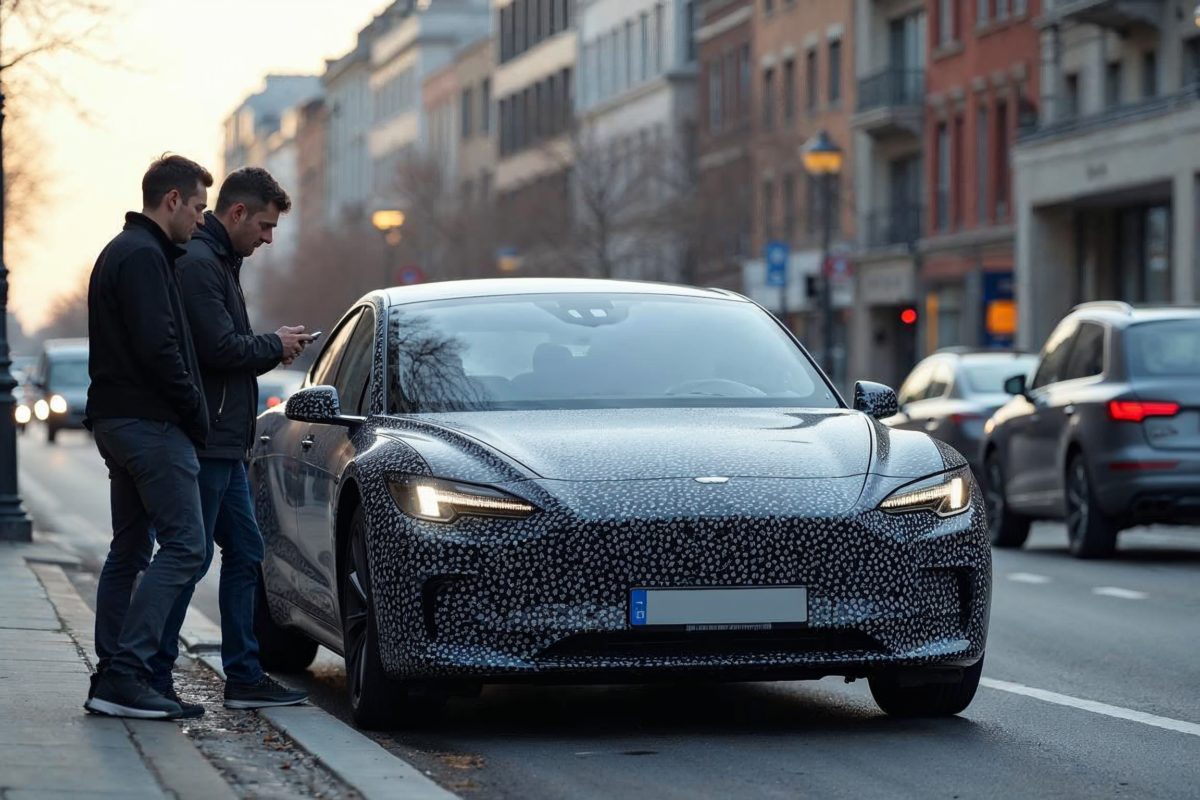
BMW is getting ready to give its flagship electric sedan, the i7, a major mid-cycle refresh for the 2027 model year, and the first official teaser image makes one thing clear: the controversial, oversized kidney grille isn’t going anywhere.
What will change, BMW suggests, is the tech. The updated 7 Series is expected to be among the first existing BMW models to adopt the brand’s next-generation in-car interface, called iDrive X, along with a new windshield-spanning display system dubbed Panoramic Vision. BMW says these “Neue Klasse” technologies will spread across its lineup by the end of 2027.
The teaser hints at an illuminated grille and a sharper lighting signature
The image is dark and intentionally stingy on details, but it confirms BMW’s design direction: continuity in overall proportions, with a front end that still leans hard into the brand’s signature kidneys, potentially with illumination, a feature already offered on today’s 7 Series.
Visually, the grille appears taller and narrower, echoing styling cues BMW has been previewing under its “Neue Klasse” banner, BMW’s name for its next era of design and EV technology.
The lighting looks reworked, too. The daytime running lights appear simpler and more horizontal, while BMW seems to keep its split-headlight layout, thin lights up top, main lamps positioned lower. Spy shots also suggest changes at the rear, with taillights that may adopt a split-bar look similar to the latest BMW 5 Series.
Don’t expect a full retreat to classic BMW elegance. The current 7 Series has taken heat, even among car critics, for its bold styling, and the teaser points to refinement, not a reset.
BMW’s big swing is inside: iDrive X and “Panoramic Vision”
The most consequential updates are expected in the cabin. BMW is preparing to roll out iDrive X and Panoramic Vision, a head-up display concept that projects information across the lower portion of the windshield.
The goal: reduce reliance on a traditional instrument cluster by pushing key driving data into the driver’s line of sight, while the center screen handles infotainment and vehicle functions. On a car like the i7, BMW’s tech showcase as much as its luxury flagship, that’s a fundamental shift in how drivers interact with the vehicle.
BMW also points to a larger central display and revised controls. Depending on trim, a passenger-side screen could be part of the package, an increasingly common move in the high-end market as brands chase the “multi-screen cockpit” look popularized by rivals.
The risk is usability. Packing everything into touchscreens can deliver instant wow-factor, but it can also make basic tasks, like adjusting airflow, more annoying if the interface isn’t exceptionally well designed.
An 800-volt battery tech leap could mean faster charging and longer range
BMW says its Neue Klasse-era battery and electrical architecture will move to an 800-volt system, technology that, in plain English, can enable faster DC fast-charging and improved efficiency when paired with the right hardware.
The company is touting gains of about 30% faster charging and 30% more driving range, depending on the model. BMW also says it’s shifting from prismatic cells to new cylindrical lithium-ion cells measuring about 46 millimeters, roughly 1.8 inches, in diameter.
BMW claims overall vehicle efficiency could improve by around 20%, and that battery costs could drop 40% to 50% versus a comparable prior generation. That doesn’t automatically mean a cheaper sticker price in the U.S., especially for a 7 Series, but it could translate into more standard equipment, better margins, or both.
The open question is timing. A facelift doesn’t always bring a full platform overhaul, and BMW hasn’t confirmed exactly how much of the 800-volt Gen6 tech the refreshed i7 will get, or whether it will roll out gradually by market.
BMW isn’t going all-in on EVs for the 7 Series, at least not yet
Even as BMW pushes its EV future, the refreshed 7 Series is expected to keep a mixed powertrain lineup: gas engines, plug-in hybrids, and the all-electric i7.
That strategy reflects reality in the luxury market. Charging infrastructure, buyer habits, and regulations vary widely across regions, and BMW doesn’t want to strand customers who still prefer, or require, internal combustion for long-distance convenience.
There’s also performance chatter. Reports suggest BMW could further upgrade its S68 V8, potentially pushing beyond the current 760i’s 536 horsepower, with speculation about a revived high-end badge (think M760) or an even more exclusive Alpina-flavored variant. BMW hasn’t confirmed any of that publicly.
Neue Klasse is BMW’s bigger bet, and the 7 Series is the early billboard
BMW’s message is that the 7 Series refresh isn’t a one-off. The company says it plans to spread Neue Klasse technologies, software, displays, electrical architecture, across its lineup by the end of 2027, even before every model moves to a dedicated Neue Klasse platform.
BMW has positioned the next-generation iX3 as the first major step in that rollout, and says demand signals are strong enough to justify moving faster. The broader the deployment, the more BMW can amortize its investments, and the more mature the software ecosystem becomes for vehicles like the i7.
BMW is also highlighting manufacturing changes, including its new plant in Debrecen, Hungary, as part of its “iFACTORY” strategy, an effort to modernize production with more data-driven planning and automation. For buyers, that matters only if it improves quality and delivery consistency, two areas luxury customers notice immediately.
For the 2027 i7, the pitch is straightforward: the styling stays assertive, but the daily experience, screens, controls, charging, and range, could take a meaningful step forward. Whether that’s enough to win over skeptics may depend less on the grille and more on how seamlessly BMW makes all that new tech work.
Key Takeaways
- The 2027 facelift teaser confirms a still massive grille that may be illuminated.
- The 7 Series is expected to get iDrive X and the Panoramic Vision display, with a redesigned cockpit.
- Gen6 800V technology promises claimed gains of 30% in charging and 30% in range.
- BMW is sticking with a multi-powertrain strategy, including the i7, plug-in hybrids, and gasoline models.
- BMW aims to roll out Neue Klasse technologies across the entire lineup by the end of 2027.
Frequently Asked Questions
What is BMW changing on the facelifted 7 Series shown in the teaser?
The teaser mainly confirms changes to the front end, with the kidney grilles still present, an optional illuminated grille, and a more horizontal daytime running light signature. The details are still hidden, but the goal seems to be refining the styling without walking back the bold choices of the current generation.
Does Panoramic Vision replace the traditional instrument cluster on the i7?
BMW says Panoramic Vision projects information along the base of the windshield and fits into a new display concept, with a central screen for infotainment and vehicle functions. The idea is to reduce reliance on a traditional gauge cluster, but the exact setup will depend on the version.
Will the BMW i7 get 800V Gen6 technology?
BMW is highlighting its 800V Gen6 architecture for the Neue Klasse wave, with claimed gains of 30% faster charging and 30% more range depending on the model. For the facelifted i7, battery improvements are mentioned as possible, but the scope and exact timing will depend on how BMW chooses to integrate them.
Is BMW dropping gasoline engines on the 7 Series in 2027?
No. Available information points to lineup continuity, with gasoline versions, plug-in hybrids, and the all-electric i7. BMW is keeping an open approach, tailoring the offering to markets and demand.
When does BMW plan to roll out Neue Klasse across its entire lineup?
BMW says it will roll out Neue Klasse technologies across its entire portfolio by the end of 2027, including on models that don’t immediately switch to a dedicated Neue Klasse platform.
Sources
En tant que jeune média indépendant, The Inquirer 🇫🇷 a besoin de votre aide. Soutenez-nous en nous suivant et en nous ajoutant à vos favoris sur Google News. Merci !